2023–2024 AMR One Health Pan-African Internship & Mentorship Programme
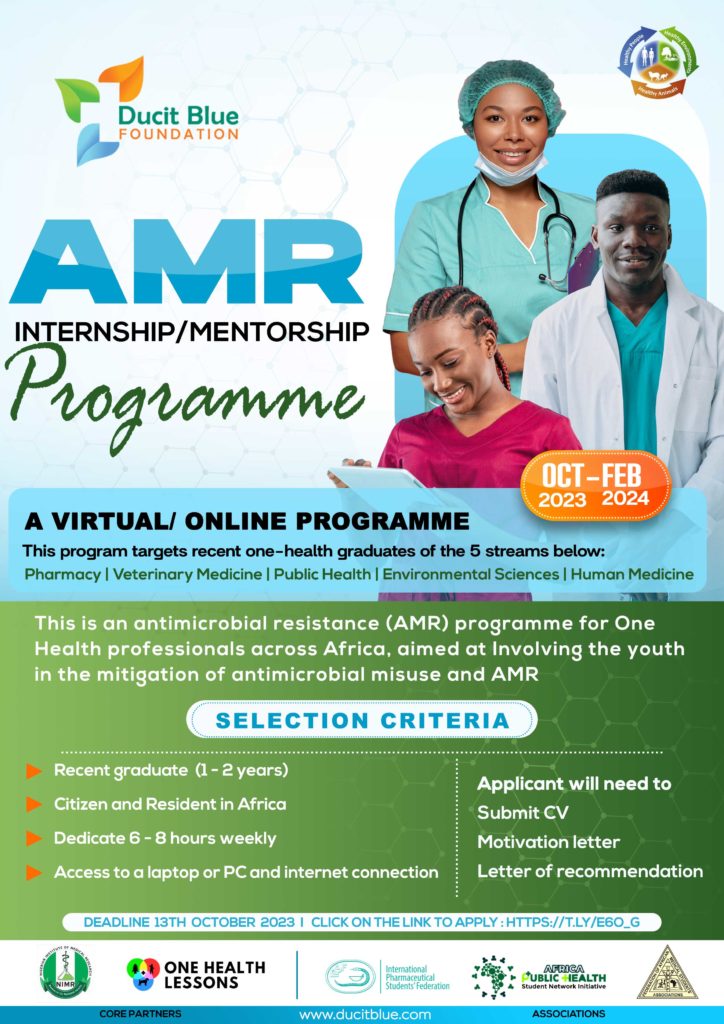
Building on the success of previous cohorts, the third edition of the Ducit Blue Foundation AMR One Health Pan-African Internship & Mentorship Programme strengthened youth leadership, interdisciplinary collaboration, and research in antimicrobial resistance (AMR). Through mentorship, technical training, networking, and innovative capstone projects, the programme empowered emerging One Health professionals to develop practical solutions aligned with the Global Action Plan on AMR.
Programme Overview
The programme commenced on 30 October 2023 and was delivered through a hybrid learning model, combining virtual training, mentorship, collaborative learning, and practical project implementation.
The cohort was implemented in partnership with Nigerian Institute of Medical Research and One Health Lesson, creating opportunities for interdisciplinary learning, regional collaboration, and professional networking across Africa.
Cohort Profile
The internship welcomed 20 interns, with equal representation from five One Health disciplines:
- Pharmacy
- Human Medicine
- Veterinary Medicine
- Public Health
- Environmental Science
Participants came from nine African countries, including one Francophone and eight Anglophone countries, fostering cross-cultural collaboration and knowledge exchange.
Mentorship & Leadership Development
The mentorship component remained central to the programme’s success. Interns were matched with mentors based on their professional backgrounds, expertise, and areas of interest, creating meaningful mentor-mentee relationships that supported both technical learning and career development.
The programme was supported by 21 mentors from 10 African countries, who provided guidance throughout the internship. Beyond mentorship, participants benefited from webinars, fireside chats, networking opportunities, and leadership development sessions designed to strengthen their capacity to drive antimicrobial stewardship and One Health initiatives within their communities.
Learning Experience
Throughout the programme, interns participated in a comprehensive learning journey that combined technical knowledge with practical leadership experience. Activities included:
- Interactive virtual training sessions
- One-on-one mentorship
- Multidisciplinary One Health group activities
- Fireside chats with industry experts
- Youth knowledge-sharing workshops
- Community outreach and cascading of One Health lessons
- Collaborative capstone projects
These experiences equipped participants with the skills, confidence, and networks needed to become future leaders in antimicrobial resistance and One Health.
Capstone Project
A defining feature of Cohort 3 was the leadership capstone project, which challenged interns to develop practical solutions aligned with the four strategic pillars of the Global Action Plan on Antimicrobial Resistance.
Working in multidisciplinary teams, interns focused on:
Awareness
Assessing antimicrobial awareness and knowledge among final-year One Health students in selected Nigerian universities.
Surveillance
Reviewing the strengths and limitations of existing AMR surveillance systems in Kenya and Ghana.
Stewardship
Analysing National Action Plans on antimicrobial stewardship across five African countries.
Infection Prevention & Biosecurity
Comparing infection prevention and control (IPC) guidelines across Kenya, Tanzania, Zimbabwe, and Nigeria.
Each team produced a project charter, workplan, data analysis report, final manuscript, and policy brief, with projects undergoing internal review and external evaluation by expert mentors to assess their feasibility, scalability, and potential impact.
Programme Outcomes & Impact
Cohort 3 successfully strengthened youth capacity in antimicrobial resistance and One Health through mentorship, leadership development, research, and regional collaboration.
Key achievements included:
- Successfully engaged 20 One Health interns across five professional disciplines.
- Strengthened interdisciplinary collaboration through a One Health approach.
- Supported participants with 21 mentors from 10 African countries.
- Developed innovative capstone projects addressing the four pillars of the Global Action Plan on AMR.
- Expanded networking opportunities through webinars, fireside chats, and stakeholder engagement.
- Empowered young professionals to lead evidence-based AMR initiatives within their institutions and communities.